


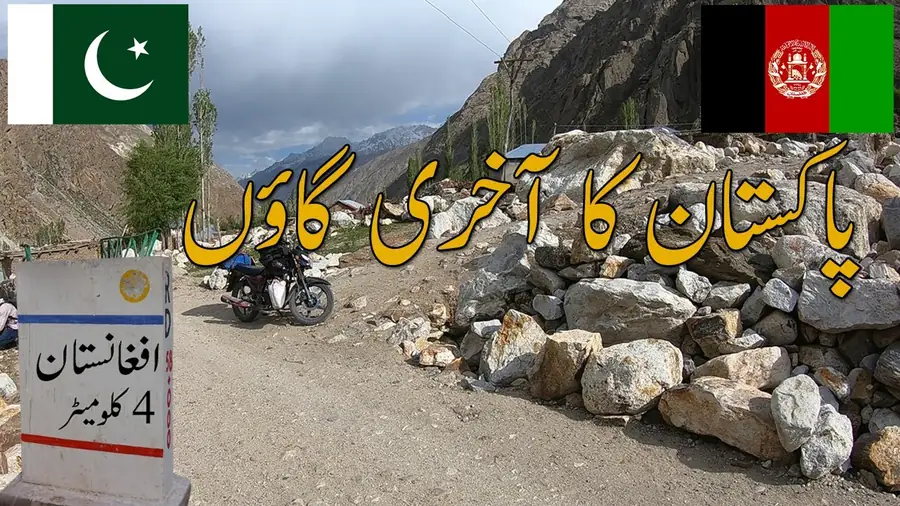
The Pakistan–Afghanistan border region is one of the most geographically distinctive and culturally significant areas of South Asia. Stretching across rugged mountains, remote valleys, historic passes and traditional settlements, this region connects communities that share languages, customs, family histories and long-standing cultural relationships.
For travellers interested in understanding Pakistan beyond its major cities and popular tourist destinations, the border region offers a different perspective. Its landscapes are shaped by mountains and difficult terrain, while everyday life is influenced by local traditions, community relationships, trade, geography and the practical challenges of living in remote areas.
Travel vlogger Adnan Musafir explored this subject in his video, “How Pakistani people Live Near Afghanistan Border? | The Most Difficult Life In Mountain.” The video focuses on people living in mountainous areas close to the Afghanistan border and provides a starting point for understanding everyday life in these communities.
This guide explores the region’s geography, local culture, traditional lifestyles, historical importance, economic activities and travel considerations. It also distinguishes the experience shown in Adnan’s video from broader information about the region.
Understanding the Pakistan–Afghanistan Border Region
Pakistan and Afghanistan share a long international border commonly associated with the Durand Line. It stretches across mountainous and relatively remote parts of Pakistan’s Khyber Pakhtunkhwa and Balochistan provinces.
The border region includes a variety of landscapes, from high mountain ranges and narrow valleys to dry plains and rocky settlements. Communities living here have adapted their lifestyles to the local environment, available resources and transportation conditions.
Unlike large urban centres, many settlements in these areas have limited infrastructure and fewer nearby public services. Roads may pass through mountainous terrain, and travelling between villages can take considerable time.
Major Areas Along the Border
Several important districts and regions are located near the Pakistan–Afghanistan border.
| Area | Province | Regional characteristics |
|---|---|---|
| Khyber District | Khyber Pakhtunkhwa | Historic Khyber Pass and communities near Torkham |
| Mohmand District | Khyber Pakhtunkhwa | Mountainous settlements and traditional tribal communities |
| Bajaur District | Khyber Pakhtunkhwa | Valleys, agricultural communities and cross-border cultural connections |
| Kurram District | Khyber Pakhtunkhwa | Mountain landscapes and culturally connected communities |
| North Waziristan | Khyber Pakhtunkhwa | Remote mountainous terrain and traditional settlements |
| South Waziristan | Khyber Pakhtunkhwa | Mountain villages and rural livelihoods |
| Chaman | Balochistan | Important border town connected with trade and movement |
| Zhob | Balochistan | Mountainous and semi-arid landscapes |
These areas are not identical. Their climates, local economies, infrastructure and security conditions vary considerably.
Adnan Musafir’s Exploration of Life Near the Afghanistan Border
Adnan Musafir published a video titled “How Pakistani people Live Near Afghanistan Border? | The Most Difficult Life In Mountain” on 17 August 2021.
The video directly relates to this article because its subject is the everyday life of Pakistani people living near the Afghanistan border in mountainous surroundings. Its title also highlights the difficult conditions associated with mountain living.
Rather than presenting the entire border region as one uniform community, the video provides a travel-focused perspective on a particular area and the people living there.
It is important to distinguish the video’s documented subject from additional information in this guide. The publicly available video description does not provide a detailed village name, a complete itinerary, individual interviews or verified prices. Therefore, specific conversations, household details and personal incidents are not attributed to Adnan without confirmation from the footage.
Video reference: How Pakistani people Live Near Afghanistan Border? | The Most Difficult Life In Mountain.
What Is Everyday Life Like Near the Afghanistan Border?
Life in remote border communities is often closely connected to the surrounding environment. Geography influences where people build their homes, how they travel, what work they undertake and how they access essential services.
Traditional Homes and Village Settlements
Many rural communities in mountainous parts of Pakistan use locally available materials and construction methods suited to their surroundings.
Depending on the location, homes may feature stone, brick, mud or concrete construction. Buildings are often designed to provide shelter from seasonal temperature changes, strong winds and challenging weather.
Village settlements may consist of houses located along mountain slopes, near agricultural land or around small roads connecting neighbouring communities.
The appearance of homes varies significantly between districts. Some villages have developed modern concrete houses, while others retain more traditional construction styles.
Family and Community Relationships
Family and community relationships are important parts of social life in many Pashtun communities.
Extended families may live close to one another, share responsibilities and support relatives during important occasions. Community relationships can also influence how people organise local activities, resolve everyday problems and assist neighbours.
Hospitality is a widely recognised cultural value in many parts of the region. Guests may be welcomed with tea, meals and conversation, although customs and expectations differ between households.
Daily Routines
Daily routines depend on occupation, season, family responsibilities and the availability of local facilities.
In agricultural villages, residents may spend considerable time working on fields, maintaining livestock or managing household responsibilities. In settlements closer to commercial roads, shops, transport services and small businesses may form a larger part of everyday activity.
Children attend schools where facilities are available, while adults balance employment, family responsibilities and community activities.
Geography and Natural Landscapes
The Pakistan–Afghanistan border region contains some of the country’s most rugged landscapes.
The terrain includes mountain ridges, valleys, dry hills, rocky slopes and areas of vegetation. Some settlements are surrounded by dramatic mountain scenery, while others are located in relatively open valleys.
Mountain Ranges and Valleys
The Hindu Kush and associated mountain systems influence the geography of parts of northwestern Pakistan and neighbouring Afghanistan.
Mountain terrain affects road construction, settlement patterns and access to services. Narrow roads and steep slopes can make journeys difficult, especially during periods of heavy rain, snowfall or landslides.
Climate and Seasonal Conditions
Climate conditions vary according to elevation and location.
| Season | General conditions | Possible impact on daily life |
|---|---|---|
| Spring | Temperatures gradually become warmer | Agricultural activity increases in suitable areas |
| Summer | Warm to hot weather, depending on elevation | Travel may be easier in some mountain locations |
| Autumn | Cooler temperatures and changing vegetation | Harvesting and seasonal preparations |
| Winter | Cold weather, with snowfall in higher areas | Roads and access to remote villages may become difficult |
Travellers should not assume that every border district has the same climate. Higher mountain settlements can experience much colder conditions than lower-altitude towns.
Culture and Traditions of Border Communities
The Pakistan–Afghanistan border is associated with communities that share historical, linguistic and cultural connections across the region.
Pashtun communities are particularly prominent in many districts on both sides of the border. However, the region also includes other ethnic and linguistic communities, and local identities differ from place to place.
Pashto Language and Regional Identity
Pashto is widely spoken in many border districts. It is used in everyday conversations, family gatherings, local markets and community interactions.
Other languages are also spoken in different areas, including regional varieties and languages associated with neighbouring communities.
Language plays an important role in preserving oral traditions, poetry, storytelling and cultural identity.
Traditional Clothing
Traditional clothing reflects local customs, climate and personal preferences.
Men in many Pashtun communities commonly wear shalwar kameez, sometimes with a waistcoat, turban or traditional cap. Women’s clothing varies by community and household, often featuring traditional fabrics, embroidery and regional designs.
Clothing choices are not uniform across the entire border region.
Food and Hospitality
Food is an important part of social and family life.
Traditional meals in many Pashtun communities include:
- Kabuli Pulao: Rice prepared with meat, carrots and raisins.
- Chapli Kebab: A seasoned meat patty associated with the cuisine of the region.
- Roti: A common bread served with different meals.
- Daal: Lentils prepared with spices and served with bread or rice.
- Green Tea: A familiar drink in many households and social settings.
Food traditions vary between districts, and not every dish is prepared in the same way.
How People Earn a Living in Mountain Communities
Economic opportunities in remote border settlements are influenced by geography, infrastructure, education and access to markets.
Many families combine different sources of income rather than depending on one occupation.
Agriculture and Livestock
Agriculture remains important in suitable valleys and rural areas.
Depending on local conditions, families may grow wheat, maize, vegetables, fruits and other crops. Livestock can also contribute to household income and food supplies.
Goats, sheep and cattle are among the animals raised in different parts of the region.
Small Businesses and Local Markets
Small shops, transport services, repair businesses and other local activities support village economies.
Markets are important places where residents purchase food, household supplies, clothing and agricultural products.
Larger towns provide access to a wider range of services, while smaller settlements may depend on travelling to nearby commercial centres.
Cross-Border Trade
The geographical relationship between Pakistan and Afghanistan has historically supported trade and the movement of goods.
Trade routes have connected markets, businesses and communities on both sides. However, commercial activity depends on border policies, security conditions, customs procedures and the availability of functioning crossings.
Border closures and restrictions can affect transporters, traders, workers and families who depend on cross-border movement.
Important Border Crossings and Historical Routes
Several crossings connect Pakistan and Afghanistan. Their operational status and permitted uses can change.
Torkham Border
Torkham is one of the best-known crossings between Pakistan and Afghanistan. It connects the Khyber District with Afghanistan’s Nangarhar Province and is an important route for trade and movement.
The surrounding region is historically associated with the Khyber Pass, which has served as a significant route between South Asia and Central Asia.
Chaman Border
Chaman is located in Balochistan and is connected to the Spin Boldak area of Afghanistan.
The crossing has historically been important for commercial activity and cross-border movement. Its operation is subject to government decisions and security developments.
Other Border Areas
Additional border locations include Ghulam Khan, Angoor Adda and Kharlachi. These crossings serve different local and regional purposes.
A crossing’s existence does not mean that ordinary tourists can use it at any time. Entry requirements, border permissions and operating arrangements must be confirmed before travel.
Historical Importance of the Pakistan–Afghanistan Border
The region has a long history of migration, trade, political change and cultural exchange.
Mountain passes and natural routes connected communities across what are now modern national borders. Merchants, travellers and local populations used these routes for trade, communication and movement.
The Khyber Pass
The Khyber Pass is one of the region’s most historically significant routes.
It connects the Peshawar Valley with areas leading towards Afghanistan and has been important in different periods of regional history.
The route has witnessed the movement of armies, traders, travellers and communities over many centuries.
Shared Cultural Connections
Communities on both sides of the border have family, linguistic and cultural connections.
Traditional music, poetry, clothing, food and social customs can show similarities across the border, although each community also has its own local identity and traditions.
Modern political boundaries and regulations influence movement, but historical and cultural relationships remain an important part of the region’s identity.
Challenges Faced by People Living Near the Border
Living in a remote mountain community can involve challenges that are different from those experienced in major cities.
Limited Infrastructure
Some settlements have limited access to paved roads, public transport, electricity, reliable internet and other services.
The level of infrastructure differs significantly between districts and individual villages.
Access to Healthcare
Residents of remote areas may need to travel to larger towns for specialist treatment, diagnostic facilities or emergency medical care.
Travel time, road conditions and the availability of transport can affect access to healthcare.
Education and Employment
Schools and educational opportunities are not equally accessible everywhere.
Some families may face long journeys to reach higher-level educational institutions. Employment opportunities can also be limited in settlements with few businesses or industries.
Weather and Transportation
Heavy rain, snowfall, landslides and difficult terrain can disrupt transportation.
Mountain roads may require careful driving, and some routes can become inaccessible during severe weather.
Border-Related Disruptions
Political tensions and security developments can affect local communities.
When crossings close or movement is restricted, the impact can extend beyond international travellers. Traders, transport workers, patients and families may also face difficulties.
Travel Guide: Visiting the Pakistan–Afghanistan Border Region
The region has geographical and cultural significance, but it should not be treated as an ordinary sightseeing destination.
Security conditions are particularly important. Travel restrictions may apply to specific districts, roads and areas close to the international border.
Is It Safe to Visit?
Safety depends on the exact destination and current conditions.
As of November 2026, international travel advisories describe serious security risks in parts of Khyber Pakhtunkhwa and along the Afghanistan border. The UK Foreign, Commonwealth and Development Office advises against all travel within 10 miles of the Pakistan–Afghanistan border. Recent reporting has also documented clashes and temporary disruption around Torkham.
Travellers should not use an old travel vlog as evidence that an area is currently safe or accessible.
Before making any journey, check current government travel advice, local administration announcements and security instructions. Do not approach restricted locations, military installations or border infrastructure without permission.
Documents and Permissions
Requirements depend on nationality, destination and the purpose of travel.
Travellers should check:
- Valid identification and passport requirements.
- Visa requirements for the country they intend to enter.
- Any local travel permits or district-level restrictions.
- Rules for photography and filming.
- Border-crossing permissions and operating arrangements.
A domestic visit to a border district and an international border crossing are two different activities. Permission to travel within Pakistan does not automatically authorise crossing into Afghanistan.
Photography and Respect for Local Communities
Photography can help document the region’s landscapes, architecture and everyday life, but visitors should act respectfully.
- Ask permission before photographing residents.
- Avoid photographing security personnel and restricted installations.
- Follow instructions from local authorities.
- Respect household privacy and cultural expectations.
- Avoid publishing sensitive location details that could create security concerns.
What Makes the Region Interesting for Cultural Travel?
Despite its challenges, the Pakistan–Afghanistan border region is important for understanding the country’s geographical and cultural diversity.
Mountain Village Life
Remote villages provide insight into how communities adapt to challenging landscapes.
Traditional homes, agricultural activities, local roads and community relationships can help visitors understand the practical realities of mountain living.
Regional Food and Traditions
Local cuisine, clothing, language and hospitality reflect the cultural identity of different communities.
These traditions are valuable subjects for responsible travel writing and documentary storytelling.
Historical Landscapes
The Khyber Pass and other historic routes help explain the long-standing connections between South Asia and neighbouring regions.
Their history makes the area significant beyond its modern political boundaries.
Frequently Asked Questions
1. Where is the Pakistan–Afghanistan border region located?
It stretches along Pakistan’s western boundary with Afghanistan, passing through parts of Khyber Pakhtunkhwa and Balochistan.
2. Which Pakistani areas are close to the Afghanistan border?
Important areas include Khyber, Mohmand, Bajaur, Kurram, North Waziristan, South Waziristan and Chaman, among others.
3. What language do people speak near the Afghanistan border?
Pashto is widely spoken in many communities. Other regional languages are also used depending on the district and local population.
4. What is everyday life like in mountain villages near the border?
Daily life varies by settlement, but agriculture, livestock, small businesses, family responsibilities and community relationships are important in many rural areas.
5. Which is the most famous Pakistan–Afghanistan border crossing?
Torkham is one of the most widely recognised crossings. Chaman is another major crossing in Balochistan.
6. Can tourists visit the Pakistan–Afghanistan border?
Access depends on current security conditions, local restrictions and government permissions. Some border areas are subject to serious travel warnings, so visitors must verify the latest situation before planning a trip.
7. What is the Khyber Pass famous for?
The Khyber Pass is a historic mountain route connecting the Peshawar region with Afghanistan. It has played an important role in trade, migration and regional history.
8. Who made the video about life near the Afghanistan border?
Travel vlogger Adnan Musafir published the video “How Pakistani people Live Near Afghanistan Border? | The Most Difficult Life In Mountain” on 17 August 2021.
9. Is the Pakistan–Afghanistan border always open?
No. Border crossings can close or operate under restrictions because of political, administrative and security developments. Travellers should confirm the current status before departure.
10. What should visitors know before travelling to the region?
They should understand the security situation, check travel advisories, follow local restrictions, carry the required documents and avoid restricted border locations.
Conclusion
The Pakistan–Afghanistan border region is much more than a line separating two countries. It is a diverse landscape of mountains, valleys, historic routes and communities with deep cultural connections.
Life in its remote settlements reflects the influence of geography, family traditions, local economies and access to essential services. While some communities maintain traditional rural lifestyles, others are connected to larger towns and commercial centres.
Adnan Musafir’s video, “How Pakistani people Live Near Afghanistan Border? | The Most Difficult Life In Mountain,” brings attention to the people living in these mountainous areas and provides a relevant starting point for exploring the subject.
Understanding the region requires more than looking at its landscapes. It also means recognising the experiences of local residents, respecting their traditions and understanding the practical challenges they face.
For anyone interested in Pakistan’s cultural and geographical diversity, the border region remains an important subject for responsible travel research and documentary storytelling.