

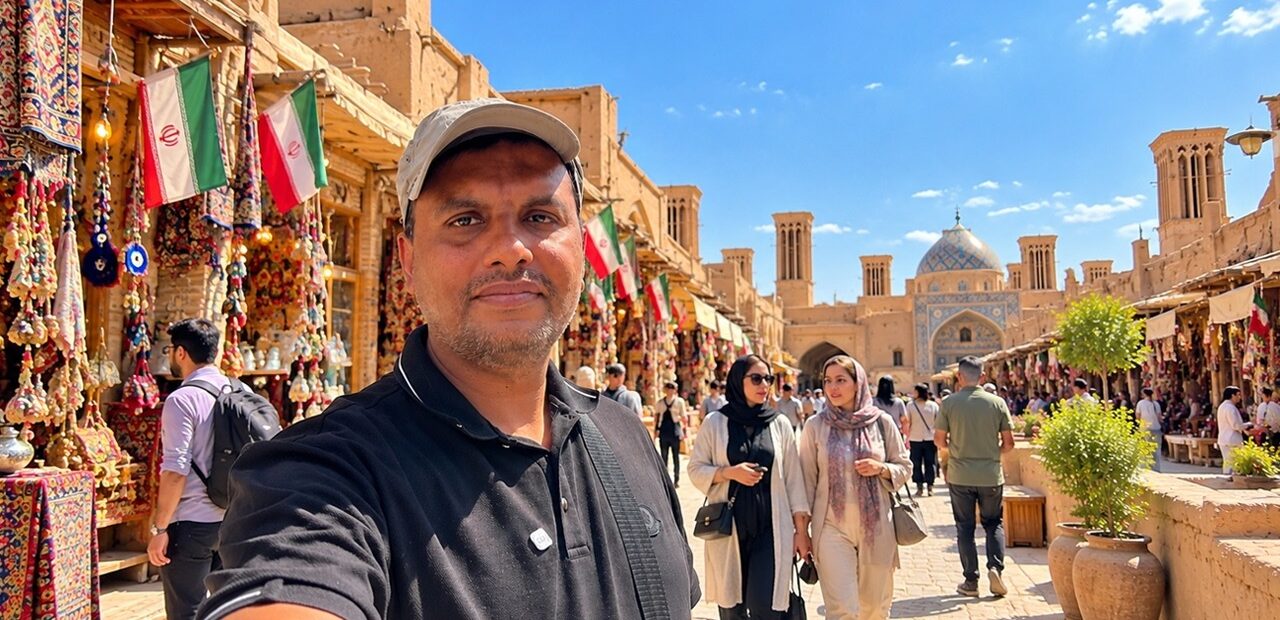
Iran is a country of historic cities, impressive architecture, traditional bazaars, mountain landscapes, Persian culture, and welcoming communities. Located next to Pakistan, it has long attracted Pakistani visitors interested in history, cultural experiences, religious destinations, and overland journeys.
For Pakistani travellers, Iran offers a different experience from many other international destinations. Its historic streets, traditional markets, regional food, ancient landmarks, and local hospitality provide opportunities to understand Persian culture and everyday life.
Travelling from Pakistan to Iran by road is also an experience that has attracted the attention of independent travellers and travel vloggers. Adnan Musafir has documented his journey across the Pakistan–Iran border, sharing a real overland travel experience and showing aspects of the journey that are useful for understanding this route.
This guide covers Iran’s major destinations, transport options, local culture, food, accommodation, travel planning, and practical considerations for Pakistani travellers.
Important travel and safety notice: This guide is for travel research and future planning. Pakistan’s Foreign Office issued a travel advisory on 10 January 2026 advising Pakistani nationals to avoid all unnecessary travel to Iran until conditions improve. Security conditions, border operations, and transport services can change quickly. Anyone considering travel should check current government advice and confirm the situation with relevant authorities before making arrangements.
Iran at a Glance
Iran, officially known as the Islamic Republic of Iran, is located in Western Asia. It shares borders with several countries, including Pakistan, Afghanistan, Turkmenistan, Azerbaijan, Armenia, Turkey, Iraq, and others.
The country has a long history associated with ancient Persian civilisations, Islamic architecture, literature, traditional crafts, and regional cultures.
| Travel Information | Details |
|---|---|
| Country | Iran |
| Capital | Tehran |
| Main language | Persian (Farsi) |
| Currency | Iranian rial and commonly used toman price quotations |
| Main religion | Islam, predominantly Shia Islam |
| Time zone | Iran Standard Time, UTC+3:30 |
| Popular destinations | Tehran, Isfahan, Shiraz, Yazd, Mashhad, Tabriz |
| Main overland route from Pakistan | Taftan–Mirjaveh, subject to current border arrangements |
| Common transport | Buses, taxis, trains, domestic flights, and private vehicles |
| Travel planning | Requires current visa, security, and border information |
Adnan Musafir’s Journey from Pakistan to Iran
A useful part of understanding Iran travel from Pakistan is learning from people who have actually completed the journey.
Adnan Musafir documented his Pakistan-to-Iran road journey in his video titled Iran – Pakistan Border Crossing | Travel From Pakistan To Iran By Road | Solo Travel, published in April 2022.
His journey provides a real travel perspective on the overland route and the experience of crossing an international border between Pakistan and Iran.
Travelling from Pakistan Towards the Iranian Border
An overland journey from Pakistan to Iran can involve long distances, changing landscapes, transport arrangements, and border procedures.
Travellers need to plan the journey carefully because the border region is remote and transport options can be limited.
The journey may involve travelling through Balochistan towards the designated border crossing before continuing into Iran.
What Travellers Can Learn from Adnan’s Experience
Adnan’s road journey highlights several important considerations for people researching this route:
- International border crossings require proper travel documents.
- Long-distance road travel requires patience and preparation.
- Transport arrangements may differ between the Pakistani and Iranian sides.
- Travellers should understand the local situation before beginning the journey.
- Independent travel requires careful planning and awareness of local conditions.
His video is a historical record of a journey completed in 2022. It should not be treated as confirmation that the same route, border arrangements, security conditions, or transport services are available today.
Travel Expenses and Visa Information from Older Videos
Adnan has also published Iran-related travel videos discussing travel expenses and visa arrangements for Pakistani travellers.
Such experiences can help readers understand the types of costs involved in international travel. However, visa requirements, application fees, exchange rates, accommodation prices, and transport fares can change.
Older travel expenses should therefore be treated as historical examples rather than current quotations.
Best Places to Visit in Iran
Iran has many historic cities and cultural destinations. Each offers a different combination of architecture, traditional markets, historical landmarks, and local experiences.
The following destinations are included for general travel research and future itinerary planning. Their accessibility should be checked against current travel advisories and local conditions.
Tehran – Iran’s Capital City
Tehran is Iran’s capital and one of its largest urban centres. It combines modern neighbourhoods, historic palaces, museums, shopping areas, and traditional markets.
The city is an important centre for business, education, culture, and transportation.
Popular attractions include:
- Golestan Palace: A historic royal complex known for its decorative architecture, mirrors, and traditional Persian design.
- Milad Tower: A prominent modern landmark offering views of the city.
- Grand Bazaar of Tehran: A large traditional marketplace with shops selling clothing, household goods, carpets, spices, and other products.
- National Museum of Iran: A museum displaying archaeological and historical collections.
- Sa’dabad Historical Complex: A collection of historic palaces and museums in northern Tehran.
Tehran is also known for its cafés, restaurants, parks, and busy urban lifestyle.
Isfahan – A City of Persian Architecture
Isfahan is famous for its historical buildings, beautiful Islamic architecture, traditional bridges, and public squares.
The city is an important destination for understanding Persian art and architectural heritage.
Notable attractions include:
- Naqsh-e Jahan Square: A large historic square surrounded by significant architectural landmarks.
- Imam Mosque: A historic mosque known for its detailed tilework and architectural design.
- Ali Qapu Palace: A historic palace overlooking Naqsh-e Jahan Square.
- Sheikh Lotfollah Mosque: A well-known architectural landmark with intricate decorative details.
- Si-o-se-pol Bridge: A historic bridge associated with the Zayandeh River.
Isfahan is also known for traditional handicrafts, Persian miniature painting, metalwork, and local sweets.
Shiraz – Persian Literature and Gardens
Shiraz is associated with Persian poetry, literature, gardens, and historical landmarks.
It has a distinctive cultural identity and is often included in itineraries exploring Iran’s historical heritage.
Popular places include:
- Nasir al-Mulk Mosque: Famous for its colourful stained-glass windows and decorative interiors.
- Eram Garden: A historic Persian garden with beautiful landscaping.
- Tomb of Hafez: A memorial dedicated to the celebrated Persian poet Hafez.
- Tomb of Saadi: A memorial associated with another major Persian literary figure.
- Vakil Bazaar: A traditional marketplace with shops selling handicrafts, spices, textiles, and other goods.
Shiraz also serves as a gateway for visitors researching ancient Persian historical sites.
Persepolis – An Ancient Persian Capital
Persepolis is one of the most important archaeological sites associated with the ancient Persian Empire.
Located near Shiraz, it contains monumental stone structures, stairways, columns, and carved reliefs.
The site provides insight into the political and cultural history of the Achaemenid Empire.
Visitors interested in ancient history and archaeology often include Persepolis in their research about Iran.
Yazd – Traditional Desert Architecture
Yazd is known for its traditional desert architecture, narrow streets, windcatchers, and historic buildings.
The city’s architecture reflects centuries of adaptation to a hot and dry climate.
Interesting places include:
- Amir Chakhmaq Complex: A prominent historic structure in the city.
- Jameh Mosque of Yazd: Known for its tall entrance and decorative tilework.
- Dolat Abad Garden: A historic Persian garden featuring a famous windcatcher.
- Old Town: A network of traditional streets, courtyards, and historic houses.
- Zoroastrian heritage sites: Places connected to the history and traditions of the Zoroastrian community.
Yazd is particularly interesting for visitors researching traditional Persian architecture and desert lifestyles.
Mashhad – A Major Religious Destination
Mashhad is one of Iran’s most important religious cities.
The city is particularly known for the Imam Reza Shrine, which attracts religious visitors from Iran and other countries.
For Pakistani visitors interested in religious tourism, Mashhad has historical and spiritual significance.
Other attractions include traditional markets, museums, and local restaurants.
Tabriz – Historic Markets and Regional Culture
Tabriz is located in northwestern Iran and has a long history of trade, craftsmanship, and regional cultural exchange.
The city’s Grand Bazaar is one of its most recognised landmarks.
Other attractions include:
- Blue Mosque.
- Historic houses.
- Traditional markets.
- Museums.
- Local handicraft shops.
Tabriz is also known for its regional food traditions and connection to the wider historical trade routes of the region.
Travelling from Pakistan to Iran by Road
Overland travel is one of the most discussed ways of travelling between Pakistan and Iran.
The traditional route passes through Balochistan and uses the Pakistan–Iran border crossing in the Taftan and Mirjaveh area.
However, this route is affected by security conditions, border restrictions, and government instructions.
Pakistan–Iran Border Crossing
The Taftan–Mirjaveh crossing is an important land route connecting Pakistan with Iran.
The journey towards the border can involve long stretches of road through remote parts of Balochistan.
Travellers should understand that crossing procedures and access arrangements can change.
Before planning an overland journey, check:
- Whether the border crossing is operating for the intended category of traveller.
- Whether the journey is permitted under current government advice.
- Whether any additional permissions or documentation are required.
- Whether transport services are operating.
- Whether security restrictions affect the route.
- Whether accommodation and onward transport are available.
Do not rely only on old travel videos or previous travellers’ experiences when making current arrangements.
Important Documents for Road Travel
Depending on nationality, visa category, and travel arrangements, travellers may need:
- A valid passport.
- An appropriate Iranian visa, if required.
- Confirmed travel arrangements.
- Accommodation details.
- Travel insurance suitable for the destination.
- Any additional permits or supporting documents required by authorities.
People travelling with their own vehicles may need additional vehicle registration, insurance, customs, and temporary import documentation.
Transport Options in Iran
Iran has several forms of domestic transportation. The best option depends on the distance, destination, travel conditions, budget, and availability.
Intercity Buses
Buses are an important form of long-distance transport in Iran.
They connect many major cities and may offer different seating and comfort categories.
Travellers researching bus journeys should compare:
- Departure locations.
- Journey duration.
- Seat categories.
- Luggage allowances.
- Ticket availability.
- Cancellation policies.
Domestic Flights
Domestic flights connect several major Iranian cities.
They can reduce travel time across long distances, although availability, booking arrangements, and payment options may be affected by changing conditions.
Trains
Iran has a railway network connecting various cities.
Train journeys may provide an alternative to buses for selected routes.
Travellers should confirm operating schedules, ticket availability, and station locations before making plans.
Taxis and Ride Services
Taxis are commonly used for local transportation.
Travellers should confirm the fare before starting a journey, particularly when using informal taxis.
Language differences can sometimes make communication difficult, so having the destination written in Persian can be helpful.
Private Vehicles
Travelling by private vehicle offers flexibility but requires careful planning.
Drivers should understand local traffic rules, insurance requirements, vehicle documentation, and road conditions.
International visitors should not assume that their home-country driving licence alone is sufficient.
Traditional Food in Iran
Iranian food is an important part of the country’s cultural identity.
Persian cuisine uses rice, meat, vegetables, herbs, fruits, nuts, spices, and different cooking techniques.
Many dishes are prepared using recipes that have been passed down through generations.
Popular Iranian Dishes
| Dish | Description |
|---|---|
| Chelo Kebab | Rice served with grilled meat or kebab |
| Ghormeh Sabzi | A traditional herb-based stew with beans and meat |
| Fesenjan | A rich stew commonly made with walnuts and pomegranate |
| Zereshk Polo | Rice served with barberries, often accompanied by chicken |
| Tahdig | A crispy layer of rice formed at the bottom of the cooking pot |
| Ash Reshteh | A thick traditional soup containing herbs, beans, and noodles |
| Dizi | A traditional slow-cooked meat and chickpea dish |
| Kuku Sabzi | A herb-based dish similar to a thick omelette |
Iranian Tea and Traditional Drinks
Tea is widely enjoyed in Iran and is often served during social visits.
Traditional tea may be accompanied by dates, sweets, dried fruits, or sugar cubes.
Other familiar items include fresh fruit drinks, saffron-based beverages, and regional refreshments.
Food for Pakistani Visitors
Pakistani travellers may recognise some similarities between Iranian and South Asian food traditions.
Rice, grilled meat, bread, lentils, and tea are familiar ingredients in both food cultures.
However, flavours, cooking techniques, and seasoning can be different.
Travellers with specific dietary requirements should ask about ingredients and food preparation before ordering.
Iranian Culture and Local People
Iran has a diverse cultural heritage shaped by Persian history, regional traditions, literature, religion, architecture, and local communities.
Understanding local customs can make travel research more meaningful and help visitors prepare for cultural differences.
Hospitality and Social Etiquette
Hospitality is an important part of many Iranian social interactions.
Guests may be offered tea, food, or assistance during social visits.
Visitors should respond politely and show appreciation.
One well-known social tradition is ta’arof, a form of Persian politeness that can involve offering, refusing, or accepting something through formal expressions of courtesy.
Understanding this custom can help visitors interpret everyday interactions.
Language
Persian, also called Farsi, is the main language spoken in Iran.
Some people also speak regional languages, including Azerbaijani, Kurdish, Arabic, and other local languages.
English is understood by some people in major tourist and business areas, but communication can be more difficult in smaller towns.
Learning a few Persian expressions can be useful.
| Persian Expression | English Meaning |
|---|---|
| Salam | Hello |
| Merci | Thank you |
| Lotfan | Please |
| Bale | Yes |
| Na | No |
| Khodahafez | Goodbye |
| Bebakhshid | Excuse me |
| Chetorid? | How are you? |
Clothing and Local Customs
Iran has specific public dress requirements.
Visitors should understand and follow the current rules applicable to their circumstances, including clothing regulations in public places and religious sites.
Rules and enforcement can change, so travellers should check current requirements before departure.
Traditional Markets and Handicrafts
Iranian bazaars are important cultural and commercial spaces.
Markets may sell:
- Persian carpets.
- Handwoven textiles.
- Spices.
- Copper products.
- Traditional ceramics.
- Jewellery.
- Saffron.
- Dried fruits.
- Local sweets.
These markets provide an opportunity to learn about traditional crafts and regional products.
Accommodation in Iran
Accommodation options vary across Iran’s major cities and smaller destinations.
Depending on location and availability, visitors may find hotels, traditional guesthouses, hostels, and other forms of accommodation.
Hotels
Major cities generally have different hotel categories.
Travellers should check the hotel’s location, facilities, payment requirements, identification rules, and booking conditions.
Traditional Guesthouses
Some historic areas offer traditional guesthouses located in renovated buildings.
These properties may feature courtyards, traditional decoration, and architecture reflecting local styles.
Budget Accommodation
Budget accommodation may be available in selected cities, but availability and prices vary.
Travellers should confirm reservations directly through reliable arrangements and understand payment requirements before arrival.
Money, Currency and Payment Considerations
Financial planning is especially important for foreign visitors to Iran.
Iran’s banking system is not generally connected to the international Visa and Mastercard networks in the same way as many other destinations.
As a result, ordinary foreign bank cards may not work for payments or cash withdrawals.
Before travelling, visitors should:
- Understand the currency and common price quotations.
- Confirm lawful and practical money-exchange arrangements.
- Check whether their accommodation accepts their available payment method.
- Keep emergency funds available.
- Avoid relying on foreign debit or credit cards.
- Understand applicable currency declaration rules.
Iranian prices may be quoted in rial or toman. One toman is equal to ten rials, so visitors should clarify which unit is being used before making a payment.
Because exchange rates and financial restrictions can change, old travel budgets should not be used as current cost estimates.
Estimated Travel Budget: What to Plan For
There is no single reliable budget for every Pakistani visitor to Iran.
Total expenses depend on travel dates, transport, accommodation, length of stay, exchange rates, and personal spending habits.
A practical travel budget should consider the following categories:
| Expense Category | What to Include |
|---|---|
| Visa and documentation | Application charges and required supporting documents |
| International transport | Flights or permitted overland transport |
| Local transport | Buses, taxis, trains, or domestic flights |
| Accommodation | Hotels, guesthouses, or other stays |
| Food | Restaurants, cafés, and daily meals |
| Attractions | Entry tickets and local experiences |
| Communication | SIM card and internet services, where available |
| Emergency funds | Unexpected transport, accommodation, or medical expenses |
Adnan Musafir’s older travel videos may help readers understand historical travel costs, but the figures should not be treated as current prices.
Best Time to Visit Iran
Iran has different climate conditions across its regions.
Mountainous areas, desert cities, coastal locations, and northern provinces can experience very different temperatures.
Spring
Spring generally brings pleasant weather to many parts of Iran.
It can be suitable for exploring historic cities and gardens, depending on local conditions.
Summer
Summer can be extremely hot in desert and southern regions.
Mountain destinations and some northern areas may offer different conditions.
Autumn
Autumn can provide comfortable temperatures in several regions.
It is often considered a useful season for researching cultural and historical itineraries.
Winter
Winter conditions vary significantly.
Mountain areas can experience snow and cold temperatures, while some southern regions remain relatively mild.
Travel dates should always be considered alongside security advice, border conditions, and local weather.
Practical Travel Tips for Pakistani Travellers
Planning an international journey requires more than selecting destinations.
Pakistani travellers researching Iran should pay attention to documentation, safety, money, communication, and local regulations.
Check Government Travel Advisories
Travel advisories should be reviewed before booking or departing.
The Pakistan Foreign Office’s January 2026 advisory advised against unnecessary travel to Iran until conditions improve.
Security conditions can change quickly, so old travel experiences should not be treated as proof of present safety.
Confirm Visa Requirements
Visa requirements depend on nationality, purpose of travel, and current immigration rules.
Pakistani travellers should confirm the correct visa category, application process, supporting documents, and fees through the relevant Iranian authorities.
Do not assume that a visa issued in a previous year will follow the same process or cost.
Keep Important Documents Safe
Keep copies of important documents, including:
- Passport.
- Visa and travel authorisations.
- Accommodation details.
- Travel insurance information.
- Emergency contacts.
- Relevant travel confirmations.
Store digital copies securely and keep essential documents accessible.
Plan Communication
Mobile connectivity, internet availability, and access to certain online services may differ from what visitors are accustomed to.
Travellers should research local communication arrangements and keep important contact information available offline.
Understand Local Laws
Visitors should respect Iranian laws and local regulations.
This includes public conduct, photography restrictions, clothing requirements, and rules concerning sensitive or restricted locations.
Avoid photographing military, security, or other restricted facilities.
Prepare for Long-Distance Travel
Iran is a large country, and journeys between major cities can take considerable time.
Travel plans should allow sufficient time for transfers, delays, and changes in transport arrangements.
Important Safety Considerations for Pakistani Visitors
Safety should be the first consideration when planning any international journey.
Iran’s regional security environment has been unpredictable, and official travel guidance should take priority over tourism content or older travel videos.
Before considering travel:
- Review the latest Pakistan Foreign Office advisory.
- Confirm whether travel to the intended destination is permitted and advisable.
- Check border and transport operations.
- Understand possible flight cancellations or land-border restrictions.
- Confirm that suitable insurance is available and valid for the destination.
- Keep emergency contact details for Pakistani diplomatic missions.
- Follow instructions from relevant authorities.
Pakistani nationals already in Iran should remain alert, minimise unnecessary movement where advised, and maintain contact with Pakistani diplomatic missions.
A previous travel vlog, a successful border crossing, or another traveller’s positive experience cannot guarantee present-day safety.
Frequently Asked Questions About Iran Travel for Pakistani Travellers
Can Pakistani citizens travel to Iran?
Pakistani citizens must meet the applicable Iranian entry and visa requirements. However, Pakistan’s Foreign Office issued an advisory on 10 January 2026 advising Pakistani nationals to avoid unnecessary travel to Iran until conditions improve. Current government advice should be checked before making any plans.
Can Pakistanis travel to Iran by road?
The traditional overland route connects Pakistan and Iran through the Taftan–Mirjaveh border area. However, border access and security conditions can change. Travellers should not assume that the route is currently available or suitable for tourism.
Which is the main border crossing between Pakistan and Iran?
Taftan on the Pakistani side and Mirjaveh on the Iranian side are associated with the main overland crossing. Current operating arrangements must be confirmed before attempting any journey.
What are the most popular cities to explore in Iran?
Tehran, Isfahan, Shiraz, Yazd, Mashhad, and Tabriz are well-known cities with historical, cultural, architectural, and religious attractions.
What language is spoken in Iran?
Persian, also known as Farsi, is the main language. Regional languages are also spoken in different parts of the country.
Is English widely spoken in Iran?
Some people in major cities and tourist areas understand English, but it is not universally spoken. Learning basic Persian expressions can help with everyday communication.
What currency is used in Iran?
Iran uses the rial, while prices are also commonly expressed in toman. Travellers should clarify the unit before paying.
Can Pakistani bank cards be used in Iran?
Ordinary international bank cards may not work because Iran’s banking system is not generally connected to international card networks. Visitors should confirm lawful payment and money arrangements before travelling.
What food should visitors try in Iran?
Popular dishes include chelo kebab, ghormeh sabzi, fesenjan, zereshk polo, ash reshteh, and tahdig.
Did Adnan Musafir travel to Iran by road?
Yes. Adnan Musafir published a video documenting his Pakistan-to-Iran border journey by road in April 2022. His video is a historical account of that journey, not confirmation of current border conditions.
Conclusion
Iran offers a rich combination of Persian history, traditional architecture, historic bazaars, regional food, literature, and cultural experiences. Cities such as Tehran, Isfahan, Shiraz, Yazd, Mashhad, and Tabriz provide different perspectives on the country’s heritage and everyday life.
For Pakistani travellers, the overland connection between the two countries is also an important part of Iran’s travel story. Adnan Musafir’s documented road journey provides a useful historical example of what travelling across the border involved at the time.
However, travel conditions are not permanent. Visa procedures, border operations, transportation, costs, and security arrangements can change. Pakistani visitors should prioritise current government advice and verify all essential arrangements before considering a journey.
Understanding the country’s culture, destinations, transport systems, and practical travel requirements can help readers make better-informed decisions about future travel to Iran.