


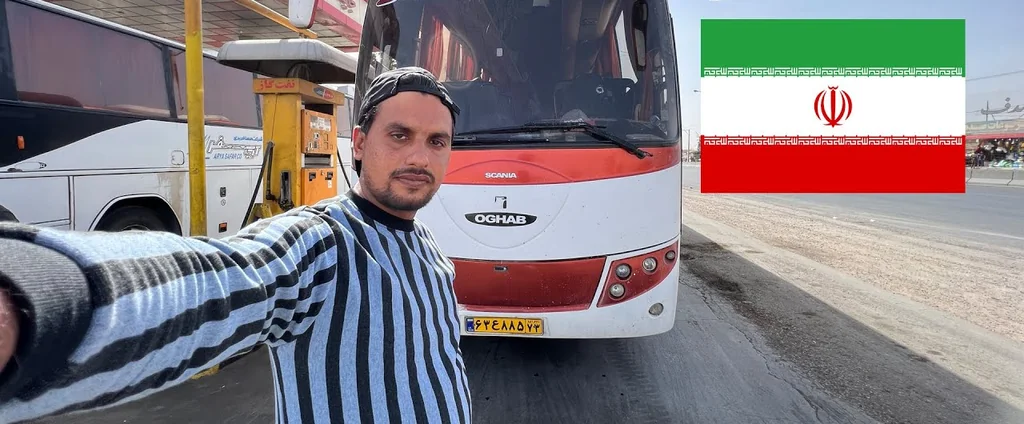
Traveling from Pakistan to Iran by road is an interesting overland journey connecting two neighboring countries with shared historical, cultural, and religious connections. The route offers opportunities to experience changing landscapes, traditional towns, desert regions, local communities, and the cultural atmosphere of western Iran.
For travelers interested in independent road trips, the journey can be an unforgettable experience. However, crossing the Pakistan-Iran border requires careful preparation, valid travel documents, awareness of local regulations, and attention to security conditions.
Travel creator Adnan Musafir documented his journey from Pakistan to Iran in his videos about the Iran-Pakistan border crossing and his first impressions of Iran. His travel experiences introduce viewers to the practical and unexpected aspects of crossing the border and exploring a neighboring country.
This guide explains the main road routes, border crossings, transportation options, required documents, travel expenses, possible destinations, and important safety considerations for anyone researching travel from Pakistan to Iran by road.
Important travel notice: Security conditions and border arrangements can change quickly. The Pakistan-Iran border region is subject to significant travel restrictions and security concerns. This article is a general travel guide, not confirmation that a particular route is currently safe or open to tourists. Check current government advisories and obtain confirmation from the relevant authorities before making travel arrangements.
Adnan Musafir’s Pakistan to Iran Road Journey
Adnan Musafir has documented his overland journey from Pakistan to Iran through a series of travel videos. These videos provide a personal perspective on border crossing and the initial experience of visiting Iran.
1. Iran-Pakistan Border Crossing
In his video titled Iran – Pakistan Border Crossing | Travel From Pakistan To Iran By Road | Solo Travel, Adnan documents his journey across the Pakistan-Iran border.
Published in April 2022, the video focuses on the overland border-crossing experience. It is particularly relevant to travelers interested in understanding how a road journey between the two neighboring countries can take place.
The Pakistan-Iran border is located in Balochistan, where remote landscapes and long-distance roads make travel planning especially important.
For independent travelers, crossing an international land border involves more than simply reaching a checkpoint. Immigration procedures, passport verification, customs requirements, transport arrangements, and local security instructions can all influence the journey.
Adnan’s video introduces this experience from a solo traveler’s perspective and provides a real example of an overland journey between the two countries.
2. First Impressions of Iran and an Unexpected Financial Loss
Adnan continued documenting his experience in a second video titled First Impressions of Iran | Scam In Iran | 50000 Ka Nuqsaan | Pakistan To Iran By Road | EP #2.
The title identifies an incident involving a reported loss of PKR 50,000 during his early experience in Iran.
This is an important reminder that international road travel can involve unexpected financial challenges. Travelers should be careful when exchanging money, arranging transportation, purchasing services, or dealing with unfamiliar individuals.
The video also focuses on Adnan’s first impressions of Iran after crossing the border.
His experience provides a personal introduction to the country rather than a complete representation of every destination or local community.
What Travelers Can Learn from Adnan’s Experience
The two videos highlight several useful lessons for people planning an international road journey:
- Research border procedures before departure.
- Keep passports and travel documents accessible.
- Understand currency exchange arrangements.
- Confirm transportation costs before accepting a service.
- Avoid handing money to unknown individuals without verification.
- Maintain an emergency financial reserve.
- Research the destination beyond older travel videos.
These lessons are useful for international travelers regardless of their destination.
Main Pakistan-Iran Land Border Crossings
Pakistan and Iran share an international border in Balochistan. Two important crossing locations are associated with overland movement between the countries.
1. Taftan-Mirjaveh Border Crossing
Taftan is located in Chagai District, Balochistan, on the Pakistani side of the border. Mirjaveh is on the Iranian side in Sistan and Baluchestan Province.
This is a traditional land crossing used for cross-border movement, trade, and pilgrimage-related travel.
The route is associated with the N-40 highway and the long road journey between Quetta and Taftan.
Main Route
A typical geographical route is:
Pakistan → Quetta → Nushki → Dalbandin → Nok Kundi → Taftan → Mirjaveh → Zahedan
The route passes through remote and relatively dry landscapes in western Balochistan.
What Makes Taftan Important?
Taftan is an established crossing associated with Pakistan-Iran road transportation.
Travelers may encounter immigration, customs, documentation, and security procedures. These arrangements can differ according to nationality, travel purpose, and current government instructions.
The crossing should not be treated as an ordinary tourist checkpoint. Travelers must verify whether their intended category of travel is currently permitted.
2. Gabd-Rimdan Border Crossing
Gabd-Rimdan is another important crossing connecting Pakistan’s Balochistan region with Iran.
Gabd is located near Gwadar on the Pakistani side, while Rimdan is on the Iranian side.
The crossing is associated with the coastal region and provides an alternative geographical connection between the two countries.
Main Route
A general coastal route can include:
Karachi → Hub → Lasbela region → Gwadar → Gabd → Rimdan → Chabahar
The exact route and permitted movements depend on current regulations and border arrangements.
Why Is Gabd-Rimdan Important?
The crossing provides an additional connection between the coastal areas of Pakistan and Iran.
It is particularly relevant to travelers researching the Makran coastal region and journeys toward Chabahar.
Pakistan’s Federal Board of Revenue has previously announced the international border-crossing status of Gabd-Rimdan and its role in regional connectivity.
However, the existence of an international crossing does not automatically mean that every type of tourist or private vehicle movement is permitted at all times.
Taftan-Mirjaveh vs. Gabd-Rimdan
Both crossings are geographically important, but they serve different travel corridors.
| Feature | Taftan-Mirjaveh | Gabd-Rimdan |
|---|---|---|
| Pakistani side | Taftan, Balochistan | Gabd, Balochistan |
| Iranian side | Mirjaveh | Rimdan |
| Main regional connection | Quetta and Zahedan | Gwadar and Chabahar |
| Route character | Inland and desert landscapes | Coastal and desert landscapes |
| Travel considerations | Remote road conditions and security arrangements | Border access and coastal route conditions |
| Suitability | Depends on current permissions | Depends on current permissions |
Neither crossing should automatically be considered the easier or safer option. The correct choice depends on nationality, travel purpose, transport arrangements, current border operations, and security conditions.
Documents Required for Traveling from Pakistan to Iran by Road
International road travel requires proper documentation. Travelers should prepare their documents before leaving Pakistan.
Requirements vary according to nationality, passport type, travel purpose, and whether the traveler is using public transport or a privately owned vehicle.
1. Valid Passport
A valid passport is essential for international travel.
Before departure, check:
- Passport validity
- Available blank pages
- Personal information accuracy
- Any applicable passport validity requirements
Keep digital and printed copies of important documents in separate locations.
2. Iranian Visa
Pakistani citizens should verify the current Iranian visa requirements for their specific travel purpose.
Visa policies can change, and different rules may apply to tourism, business, pilgrimage, and other categories.
Do not assume that a visa exemption, previous approval, or older travel experience automatically applies to a new journey.
3. Transportation and Border Documents
Depending on the mode of transport, travelers may need:
- Confirmed transport arrangements
- Border-crossing authorization where applicable
- Immigration documentation
- Customs declarations
- Supporting travel information
4. Vehicle Documents for Private Road Travel
Travelers intending to cross with their own motorcycle or car may need additional documents.
These can include:
- Vehicle registration documents
- Proof of vehicle ownership
- Valid driving licence
- International driving permit where required
- Vehicle insurance accepted in the destination country
- Temporary vehicle import documentation
- Customs or vehicle-entry paperwork
A Carnet de Passages may be relevant to certain international vehicle journeys, but its acceptance and requirements must be confirmed for the specific crossing and vehicle.
Do not assume that a normal Pakistani vehicle registration document alone permits a private vehicle to enter Iran.
5. Additional Permissions and Security Requirements
The Pakistan-Iran border region has security-related travel controls.
Depending on current regulations, travelers may be required to obtain additional permissions or follow specific movement arrangements.
Foreign visitors and Pakistani citizens may face different procedures.
Confirm all requirements with the relevant authorities before departure.
Route from Pakistan to Iran by Road
The route depends on the departure city and selected border crossing.
Route from Lahore to Iran
Travelers starting in Lahore may research a geographical route through central and western Pakistan.
A general route toward the Taftan crossing is:
Lahore → Multan → Sukkur → Quetta → Nushki → Dalbandin → Taftan → Mirjaveh
This is a long-distance journey involving multiple road sections and changing landscapes.
The exact travel route may need to be adjusted according to security restrictions and permitted transport arrangements.
Route from Karachi to Iran
A coastal route from Karachi may include:
Karachi → Hub → Lasbela region → Gwadar → Gabd → Rimdan
Another geographical route connects Karachi with Quetta and Taftan.
The coastal corridor is relevant for travelers interested in the Makran region, while the inland route connects with western Balochistan.
Route from Quetta to Taftan
Quetta is an important starting point for the traditional Taftan border route.
The journey continues through areas such as Nushki, Dalbandin, and Nok Kundi before reaching Taftan.
The route is long and passes through remote terrain, so travelers should not underestimate the need for transport planning, water, fuel, and security arrangements.
Major Destinations to Explore in Iran
After entering Iran, travelers may consider several destinations depending on their visa, transport arrangements, available time, and current security conditions.
The following places are general travel destinations, not a claim that they were all visited by Adnan Musafir during his documented journey.
1. Zahedan
Zahedan is an important city in southeastern Iran and is geographically connected with the Mirjaveh border area.
The city is a regional center with markets, residential neighborhoods, transportation facilities, and local businesses.
For travelers entering through Mirjaveh, Zahedan is an important nearby destination to understand when planning onward transportation.
2. Chabahar
Chabahar is a coastal city in southeastern Iran, located near the Gulf of Oman.
It is known for its port, coastal scenery, and regional commercial importance.
Visitors researching this destination may be interested in:
- Coastal landscapes
- Local seafood
- Traditional markets
- Port-related activities
- Nearby natural attractions
Travel access should always be checked before arranging a visit.
3. Kerman
Kerman is a historic city in southeastern Iran.
It has a long cultural and commercial history and is associated with traditional architecture, markets, and desert landscapes.
Travelers may explore its historic buildings, local food, and regional handicrafts.
4. Yazd
Yazd is famous for its traditional desert architecture and historic urban environment.
The city is associated with narrow streets, windcatchers, mud-brick buildings, and traditional houses.
It is particularly interesting for visitors who enjoy architecture and cultural history.
5. Isfahan
Isfahan is one of Iran’s most famous historical cities.
It is known for impressive architecture, historic bridges, traditional bazaars, and important public squares.
Popular attractions include:
- Naqsh-e Jahan Square
- Imam Mosque
- Ali Qapu Palace
- Si-o-se-pol Bridge
- Traditional bazaars
These attractions make Isfahan a major destination for travelers interested in Persian architecture and history.
6. Tehran
Tehran is Iran’s capital and its largest metropolitan center.
The city combines modern commercial districts, historical sites, museums, parks, and traditional markets.
Visitors may explore museums, local neighborhoods, historic palaces, and the city’s food culture.
A journey from southeastern Iran to Tehran requires substantial additional travel planning.
Transportation Options for Pakistan-Iran Road Travel
Travelers can consider different transportation methods depending on their circumstances and the permissions available.
1. Bus and Shared Transport
Public and shared transportation may be available on certain sections of the journey.
However, international passenger services, border access, and schedules can change.
Travelers should confirm whether a specific operator is currently providing the required service rather than relying on old schedules.
2. Private Car
A private car offers flexibility, but crossing an international border with a vehicle involves additional documentation and customs requirements.
Travelers should confirm temporary vehicle import procedures and insurance arrangements before departure.
3. Motorcycle Travel
Motorcycle travel is attractive to independent travelers and adventure riders.
However, a motorcycle journey through Balochistan and into Iran requires additional preparation.
Important considerations include:
- Vehicle registration and ownership documents
- Driving licence and applicable international permit
- Iranian vehicle-entry requirements
- Fuel planning
- Spare parts and repair arrangements
- Protective riding equipment
- Security instructions
- Weather and road conditions
A motorcycle suitable for domestic travel is not automatically authorized for international border crossing.
4. Organized Travel Arrangements
Some travelers prefer arranging transportation and border procedures through experienced travel operators.
An established provider may help explain documentation, accommodation, local transportation, and relevant travel restrictions.
Always verify the operator’s credentials and the actual services included before paying.
Estimated Cost of Traveling from Pakistan to Iran by Road
The total cost depends on the departure city, transportation method, trip duration, accommodation, food, visa arrangements, and activities.
The following table provides broad budgeting categories rather than verified current prices.
| Expense Category | What to Include |
|---|---|
| Visa and documentation | Applicable visa and processing expenses |
| Transportation | Bus, shared transport, fuel, or private vehicle expenses |
| Border-related expenses | Applicable customs, documentation, or administrative charges |
| Accommodation | Hotels, guesthouses, or other permitted stays |
| Food | Restaurants, local meals, and drinking water |
| Local transport | Taxis, buses, or other city transportation |
| Communication | SIM, mobile data, and connectivity |
| Emergency funds | Medical, transport, or unexpected expenses |
Factors That Influence the Budget
Departure city: Traveling from Lahore or Karachi to the border involves different distances and transportation costs.
Travel method: Private vehicles, motorcycles, and public transport have different expenses.
Accommodation: Hotel prices vary by destination, season, and quality.
Travel duration: Longer stays increase food, accommodation, and local transportation expenses.
Currency exchange: Exchange rates and the availability of payment services can affect the final budget.
Unexpected problems: Delays, transport changes, and additional documentation requirements can increase costs.
It is better to calculate a realistic budget using current quotations instead of relying on outdated travel estimates.
Currency and Money Management in Iran
Money management deserves particular attention when traveling internationally.
Iran has its own currency system, and travelers may encounter prices expressed using toman as well as rial.
Understanding the difference is important.
- The official currency is the Iranian rial.
- One toman is commonly used to represent 10 rials.
- Prices should be confirmed clearly before making payments.
- Exchange rates can change.
- International card acceptance may be limited.
Practical Money Tips
- Confirm the exchange rate before exchanging money.
- Count cash carefully.
- Ask whether a quoted price is in rial or toman.
- Avoid informal exchange arrangements that cannot be verified.
- Keep money in more than one secure location.
- Maintain an emergency reserve.
Adnan Musafir’s second Iran video mentions a reported financial loss of PKR 50,000. His experience makes it particularly important for travelers to verify payments and financial arrangements.
Food and Local Culture in Iran
Iran has a diverse food culture shaped by regional ingredients, history, and traditional cooking practices.
Travelers exploring local restaurants and markets may discover a wide range of dishes.
Popular Iranian Foods
| Food | Description |
|---|---|
| Chelo Kebab | Rice served with grilled meat |
| Ghormeh Sabzi | Traditional herb-based stew |
| Fesenjan | A rich stew commonly made with walnuts and pomegranate |
| Dizi | A traditional slow-cooked meat and chickpea dish |
| Ash Reshteh | A thick traditional soup with beans, herbs, and noodles |
| Tahdig | Crispy rice traditionally formed at the bottom of a cooking pot |
| Persian Saffron Rice | Rice prepared with aromatic saffron |
Tea and Social Culture
Tea is an important part of everyday hospitality in Iran.
It is commonly served in homes, traditional tea houses, and other social settings.
Travelers may also notice the importance of family gatherings, traditional food, and hospitality in Iranian social life.
Traditional Markets
Traditional bazaars are important commercial and cultural spaces.
Visitors can find:
- Spices
- Textiles
- Carpets
- Handicrafts
- Traditional clothing
- Household products
- Local food
Markets offer an opportunity to understand regional products and local shopping habits.
Cultural Etiquette for Pakistani Travelers
Pakistan and Iran share several cultural and religious connections, but visitors should still understand local customs.
Dress Respectfully
Travelers should understand and follow current local clothing regulations, including applicable rules for women and men.
Respect Religious Sites
Mosques, shrines, and other religious locations require respectful behavior.
Follow instructions about footwear, photography, and appropriate clothing.
Learn Basic Local Expressions
Learning simple Persian greetings can help travelers communicate more comfortably.
Useful expressions include:
| Persian Expression | Meaning |
|---|---|
| Salam | Hello |
| Merci | Thank you |
| Lotfan | Please |
| Baleh | Yes |
| Na | No |
| Khodahafez | Goodbye |
Ask Before Photographing People
Always respect people’s privacy and seek permission before taking close-up photographs.
Photography restrictions may apply around sensitive buildings, infrastructure, and security-related locations.
Important Safety Considerations for the Pakistan-Iran Road Journey
Safety is one of the most important parts of planning this trip.
The border region in Balochistan has significant security concerns, and the wider regional situation can affect travel arrangements.
1. Review Current Travel Advisories
Check current government travel advisories for both Pakistan and Iran.
Some foreign governments advise against travel to parts of Balochistan and Iran. Advice can differ according to nationality and may change without much notice.
2. Confirm Border Operations
A border crossing may be recognized as an international crossing without being available for every category of traveler.
Confirm:
- Whether the crossing is operating
- Whether passenger movement is permitted
- Whether private vehicles can cross
- Applicable immigration procedures
- Current operating hours
- Any additional security requirements
3. Follow Local Security Instructions
Travelers must follow official instructions at checkpoints and border facilities.
Do not attempt to bypass security procedures or enter restricted areas.
4. Keep Emergency Contacts Available
Save relevant emergency contact information and share your travel itinerary with a trusted person.
5. Avoid Unverified Financial Arrangements
Confirm transportation prices, accommodation bookings, and money exchanges before making payments.
6. Prepare for Travel Disruptions
Border closures, road restrictions, security incidents, and transportation delays can affect international journeys.
Keep a flexible schedule and avoid making non-refundable arrangements until travel permission is confirmed.
Pakistan to Iran by Road: A Practical Planning Checklist
Before planning the journey, use this checklist to organize the essential arrangements.
- Confirm current security conditions in the intended travel regions.
- Verify that the selected border crossing permits your type of travel.
- Check the latest Iranian visa requirements.
- Confirm passport validity.
- Arrange transportation and border procedures.
- Prepare vehicle documents if traveling with a private vehicle.
- Confirm accommodation arrangements.
- Understand local currency and payment practices.
- Prepare an emergency budget.
- Save important contact information.
- Check current road conditions and transport availability.
- Share your itinerary with a trusted person.
Frequently Asked Questions
Can I travel from Pakistan to Iran by road?
Overland travel between Pakistan and Iran is possible through designated border crossings, subject to current border operations, visa requirements, security restrictions, and the traveler’s nationality and transport arrangements.
Which is the main road border between Pakistan and Iran?
Taftan on the Pakistani side and Mirjaveh on the Iranian side form a traditional land crossing between the two countries.
Is Gabd-Rimdan another Pakistan-Iran border crossing?
Yes. Gabd-Rimdan is another recognized international crossing in the coastal region of Balochistan. Its current passenger and vehicle access must be confirmed before travel.
Can Pakistani citizens travel to Iran by road?
Pakistani citizens may be able to travel to Iran by road when they meet the applicable passport, visa, border, and security requirements. Current rules should be confirmed before departure.
Can I travel to Iran on my own motorcycle?
This depends on current border permissions and vehicle-entry requirements. Travelers should confirm vehicle registration, ownership documents, driving licence requirements, insurance, and customs procedures before attempting to cross.
How long does it take to travel from Pakistan to Iran by road?
Travel time depends on the departure city, chosen border crossing, road conditions, security arrangements, border processing, and onward destination. There is no single reliable travel duration for every journey.
What is the currency used in Iran?
Iran’s official currency is the Iranian rial, although the toman is commonly used in everyday price discussions. Travelers should confirm which unit is being quoted.
What happened to Adnan Musafir during his Iran journey?
Adnan documented his Pakistan-Iran border crossing in one video. In a later video, titled First Impressions of Iran, he reported a financial loss of PKR 50,000 in the title. The video also introduces his early impressions of Iran.
Is it safe to travel from Pakistan to Iran right now?
Safety depends on current conditions in both countries and especially the border region. Security advisories, border operations, and regional developments should be checked immediately before travel. An older travel vlog cannot confirm present-day safety.
What are some popular places to visit in Iran?
Iran has several well-known destinations, including Tehran, Isfahan, Yazd, Kerman, and Chabahar. Whether these places are accessible and suitable for a particular trip depends on current security conditions and travel permissions.
Conclusion
Traveling from Pakistan to Iran by road is an interesting overland journey connecting two neighboring countries with deep historical and cultural links. Routes through Taftan-Mirjaveh and Gabd-Rimdan provide important geographical connections, while destinations such as Zahedan, Chabahar, Kerman, Yazd, Isfahan, and Tehran offer different cultural and travel experiences.
Adnan Musafir’s documented border-crossing journey and first impressions of Iran provide a personal perspective on this type of travel. His reported financial loss also highlights why travelers should verify payments, transportation arrangements, and unfamiliar services carefully.
The most important part of planning this journey is preparation. Travelers should confirm visa requirements, border access, vehicle permissions, security conditions, and transportation arrangements before departure.
With accurate information and appropriate precautions, travelers can better understand the practical requirements of international road travel between Pakistan and Iran.